




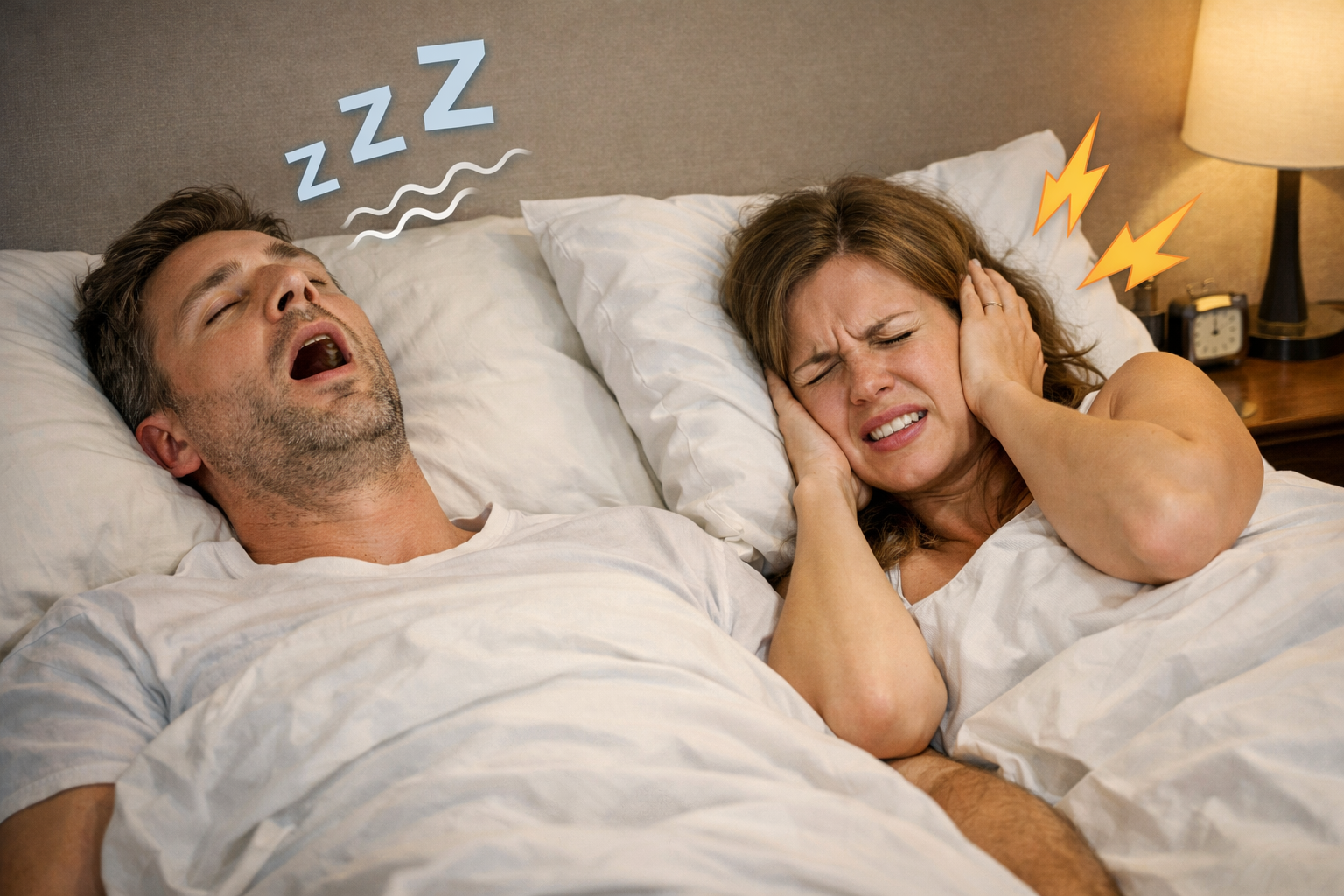
Snoring is common. For some people, it’s occasional and mild. For others, it’s loud, frequent, and disruptive.
While snoring is often harmless, it can sometimes signal deeper sleep or breathing issues. Understanding why snoring happens helps you decide whether it’s a minor inconvenience — or something that deserves attention.
What Causes Snoring?
Snoring occurs when airflow through the mouth and nose becomes partially blocked during sleep. As air passes through narrowed airways, surrounding tissues vibrate — producing the snoring sound.
The more restricted the airway, the louder the vibration.
Common Reasons People Snore
- Sleeping on the back
- Nasal congestion or allergies
- Excess weight around the neck area
- Alcohol consumption before bed
- Relaxed throat muscles during deep sleep
These factors increase airway narrowing, especially during the deepest stages of sleep.
Why Snoring Gets Worse With Age
As we age, muscle tone naturally decreases. Throat tissues may relax more during sleep, increasing the likelihood of vibration and airway narrowing.
This is one reason snoring becomes more common in middle age and beyond.
Occasional vs Chronic Snoring
Occasional snoring — such as during a cold or after a late night — is usually harmless.
Chronic loud snoring, especially accompanied by daytime fatigue, may indicate something more serious.
When Snoring May Signal Sleep Apnea
Obstructive sleep apnea is a condition where breathing repeatedly stops and starts during sleep.
Warning signs include:
- Loud, persistent snoring
- Gasping or choking sounds during sleep
- Frequent awakenings
- Morning headaches
- Excessive daytime sleepiness
If you often wake up tired despite sleeping, snoring-related breathing disruption may be a factor.
How Snoring Affects Sleep Quality
Even without full apnea episodes, heavy snoring can fragment sleep cycles.
Interrupted deep and REM sleep reduces restoration, increasing the risk of sleep debt over time.
You can explore how sleep debt accumulates when sleep quality declines.
Simple Ways to Reduce Snoring
- Sleep on your side instead of your back
- Maintain a healthy weight
- Avoid alcohol close to bedtime
- Treat nasal congestion or allergies
- Maintain consistent sleep timing
In many mild cases, small adjustments reduce snoring significantly.
When to See a Doctor
Consider professional evaluation if:
- Snoring is very loud and nightly
- You experience breathing pauses
- You wake with dry mouth or headaches
- You feel persistently exhausted
- Your partner reports choking sounds
Sleep apnea is treatable — and addressing it can dramatically improve energy and long-term health.
The Bigger Picture
Snoring is common, but it is not always harmless.
Occasional snoring is usually minor. Persistent loud snoring combined with fatigue deserves attention.
Healthy airway function supports deeper sleep, better oxygen flow, and stronger recovery each night.
Frequently Asked Questions
Is snoring always a sign of sleep apnea?
No. Many people snore without having sleep apnea. However, loud chronic snoring with fatigue should be evaluated.
Why do I snore even if I’m not overweight?
Airway structure, nasal congestion, and sleep position also influence snoring.
Can side sleeping reduce snoring?
Yes. Side sleeping often reduces airway collapse compared to back sleeping.
This article is for informational purposes only and does not replace professional medical advice. If you suspect sleep apnea or breathing issues, consult a qualified healthcare professional.