





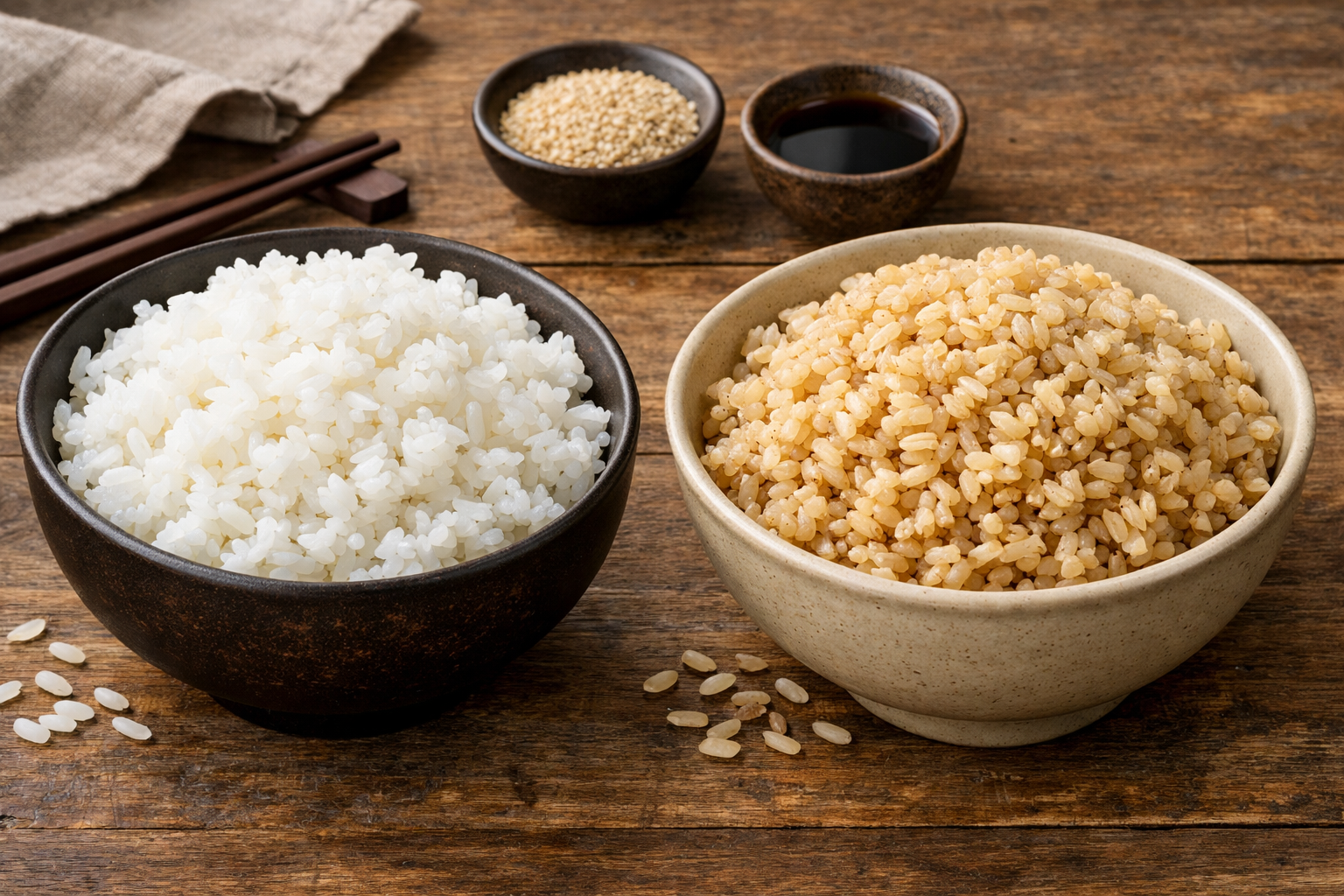
- The Basic Difference Between White Rice and Brown Rice
- Why White Rice Has Been Traditionally Preferred in India
- Is Brown Rice Always the Healthier Choice?
- Digestion Matters More Than Labels
- Rice, Energy Levels, and Mental Clarity
- What About Blood Sugar Concerns?
- Which Rice Is Better for Daily Indian Meals?
- Listening to Your Body Over Food Trends
- So, White Rice or Brown Rice?
Rice is a staple food for millions of Indians, eaten daily across regions and cultures. In recent years, brown rice has often been promoted as the healthier alternative, while white rice is frequently blamed for weight gain and poor health.
This has led to confusion: should Indians stop eating white rice altogether, or is the comparison more nuanced than it seems?
The Basic Difference Between White Rice and Brown Rice
Brown rice is a whole grain. It retains the bran and germ, which contain fiber, vitamins, and minerals. White rice is milled, removing these outer layers, resulting in a softer texture and longer shelf life.
Nutritionally, brown rice contains more fiber and slightly more micronutrients, while white rice is easier to digest and quicker to cook.
Why White Rice Has Been Traditionally Preferred in India
In Indian diets, white rice has been consumed for centuries, often paired with lentils, vegetables, curd, or fermented foods. These combinations improve digestion and nutrient absorption.
White rice is gentle on the digestive system, which is one reason it has been commonly recommended during illness or recovery.
Is Brown Rice Always the Healthier Choice?
Brown rice provides more fiber, which can help with satiety and blood sugar regulation. However, higher fiber is not automatically better for everyone.
Some people experience bloating, heaviness, or digestive discomfort after eating brown rice regularly. This is especially true for those with sensitive digestion or high daily stress.
If you often feel uncomfortable after meals, understanding
why you feel bloated after simple meals
can offer helpful context.
Digestion Matters More Than Labels
Food that looks healthy on paper may not suit every body. White rice is lower in fiber, which makes it easier to digest and less taxing on the gut.
For people dealing with fatigue, stress, or digestive imbalance, easily digestible foods can sometimes support better energy than heavier alternatives.
Rice, Energy Levels, and Mental Clarity
Carbohydrates are a primary energy source. White rice provides quicker energy, while brown rice releases energy more slowly due to its fiber content.
For some people, brown rice supports steadier energy. For others, it can feel heavy and lead to sluggishness. Energy responses are individual and often influenced by meal timing and overall diet.
Mental clarity is closely linked to digestion and energy balance. Exploring
simple daily changes that improve mental clarity
can help identify whether food choices play a role.
What About Blood Sugar Concerns?
White rice has a higher glycemic index, meaning it can raise blood sugar more quickly. However, this effect is influenced by portion size and food combinations.
Eating rice with protein, vegetables, fats, or fermented foods slows glucose absorption and reduces sharp spikes.
Which Rice Is Better for Daily Indian Meals?
There is no single answer that suits everyone. White rice can be a perfectly healthy choice when eaten in balanced portions and combined with supportive foods.
Brown rice may suit those who digest it well and prefer slower energy release. For others, rotating between white and brown rice can offer balance without stress.
Listening to Your Body Over Food Trends
Modern food advice often pushes one option as superior. In reality, your body’s response matters more than trends.
If a food leaves you feeling energized, comfortable, and clear-headed, it is doing its job — regardless of its label.
So, White Rice or Brown Rice?
White rice is not inherently bad, and brown rice is not universally better. The healthier choice depends on digestion, lifestyle, stress levels, and how foods are combined.
Choosing what suits your body, rather than following rigid rules, leads to better long-term health and sustainability.