





Why Modern Life Feels Mentally Overwhelming (Even When You’re Not Doing Much)
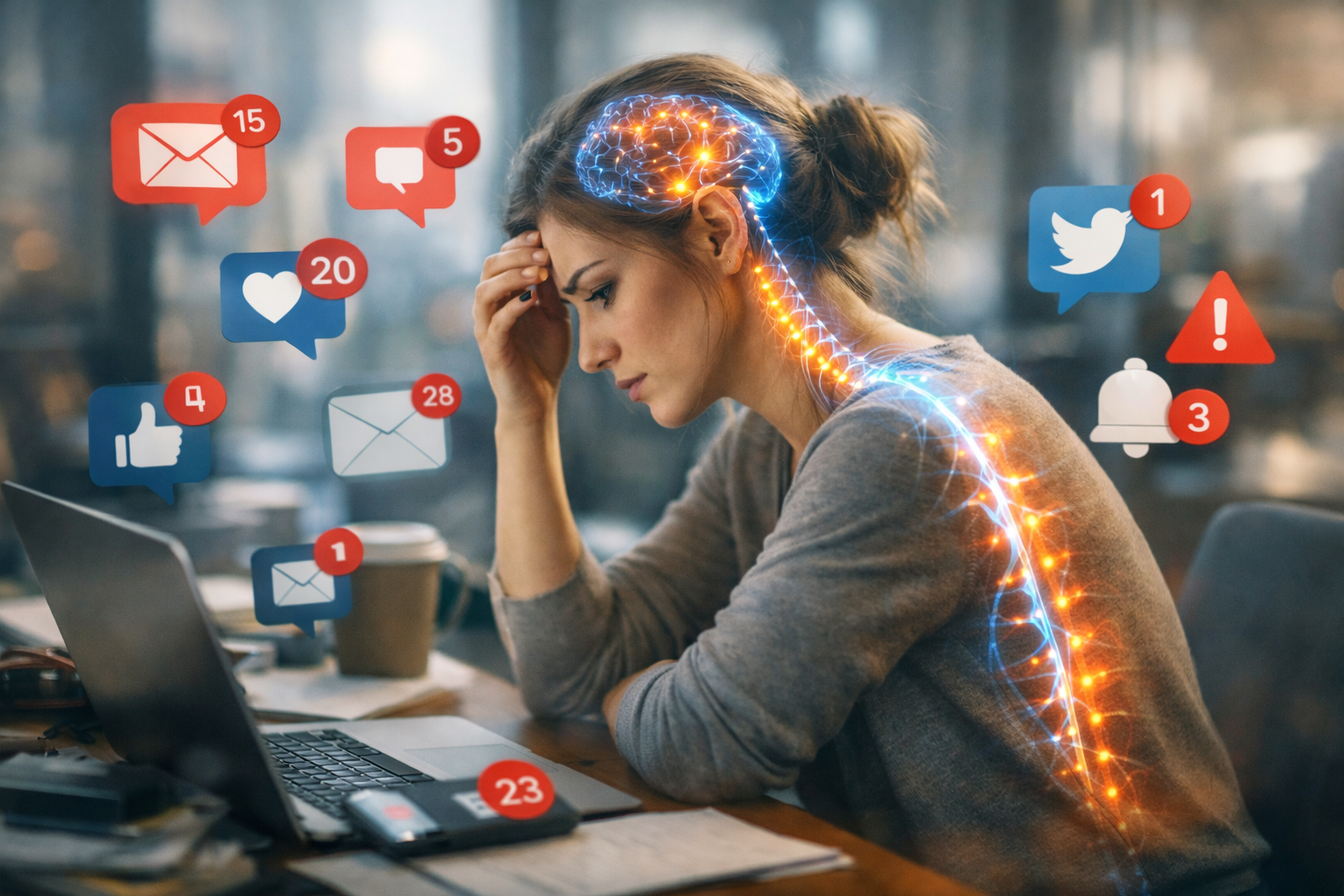
Modern life mental overwhelm is one of the most common yet misunderstood experiences today. Many people feel mentally exhausted — even on days when they haven’t done anything physically demanding.
If you often think, “Why am I so drained? I didn’t even do that much,” the answer may not be workload. It may be stimulation.
Modern life is not heavy because of effort. It is heavy because of constant input.
The Brain Was Not Designed for Continuous Stimulation
Your nervous system evolved for short bursts of stress followed by recovery. Today, recovery rarely happens.
From the moment you wake up:
- You check your phone.
- You scan notifications.
- You switch between apps.
- You consume news, reels, messages, emails.
This keeps your brain in low-grade alert mode — similar to what we discussed in The Hidden Cost of Modern Work.
The result is not physical fatigue. It is neurological saturation.
Micro-Stressors Add Up
You may not notice them, but small digital interruptions act as stress triggers:
- Unread messages
- Constant scrolling
- Information overload
- Multitasking tabs
- Background noise from devices
These micro-stressors keep your nervous system activated, contributing to nervous system dysregulation symptoms.
Over time, this leads to mental fog, irritability, and decision fatigue.
Why You Feel Mentally Drained by Evening
Even if you didn’t do “hard work,” your brain was processing nonstop stimuli all day.
This is closely connected to the patterns explored in Why You Feel Mentally Drained by Evening.
Your cognitive bandwidth gets consumed by task switching — not deep work.
The Attention Economy Is Competing for Your Nervous System
Modern platforms are designed to hold attention. Every scroll is engineered to keep you engaged.
When this becomes habitual, focus declines and rest becomes harder. Many of the patterns overlap with Phone Habits That Quietly Destroy Focus.
The brain never fully powers down.
Sleep Doesn’t Fully Repair Digital Overload
You might sleep 7–8 hours and still feel tired.
This experience is explored in Why You Feel Tired Even After Sleeping 8 Hours.
When mental overwhelm accumulates daily, sleep becomes lighter and less restorative.
Even caffeine habits can amplify this stress cycle, especially if you experience anxiety after coffee — something explained in Why Coffee Makes Some People Anxious.
Signs Modern Life Is Overstimulating You
- Feeling tired but restless
- Difficulty focusing on one task
- Irritability by evening
- Constant urge to check your phone
- Trouble falling asleep despite exhaustion
If these feel familiar, your nervous system may need regulation — not more productivity hacks.
How to Reduce Mental Overwhelm in Modern Life
1. Reduce Input Before Increasing Output
Limit unnecessary notifications. Protect silent blocks.
2. Create Device-Free Transitions
First 30 minutes after waking and last 60 minutes before sleep should be screen-light.
3. Single-Task Whenever Possible
Multitasking increases stress hormones and reduces efficiency.
4. Build Nervous System Recovery Into Your Day
Short walks, slow breathing, and intentional pauses help shift your body out of constant alert mode.
Modern Life Isn’t Slow — But You Can Be
You may not be able to eliminate screens or responsibilities.
But you can change how your nervous system responds.
Mental overwhelm is not a personal failure. It is a predictable response to constant stimulation.
The solution is not doing more. It is regulating better.
Final Thoughts
Modern life mental overwhelm doesn’t come from weakness. It comes from overload.
When you understand that your exhaustion is neurological, not moral, you stop blaming yourself.
You begin creating space instead of pressure.