Have you ever felt constantly tired, emotionally overwhelmed, or mentally restless — even when your life seems relatively normal on the outside?
Many people assume this is due to lack of sleep, poor routine, or simply “stress.” But in reality, these symptoms often point to something deeper — a dysregulated nervous system.
When your nervous system is not functioning in balance, your body struggles to shift between stress and relaxation. Over time, this creates a state where you feel both exhausted and wired at the same time.
👉 To understand the foundation, read: How to Reset Your Nervous System Naturally
What Does Nervous System Dysregulation Actually Mean?
Your nervous system is responsible for how your body reacts to situations — whether it feels safe and relaxed, or alert and stressed. Ideally, it should move fluidly between these states depending on what you are experiencing.
However, due to constant stimulation, emotional pressure, and modern lifestyle habits, your system can become “stuck” in a stress response. This means your body behaves as if it is under pressure — even when there is no real threat.
Over time, this imbalance begins to affect your sleep, energy levels, digestion, hormones, and emotional well-being.
Clear Signs Your Nervous System Is Dysregulated
Persistent Fatigue That Doesn’t Improve With Rest
One of the most common signs is feeling constantly tired, even after getting enough sleep. This happens because your body is not entering deep recovery states. Instead, it remains partially alert, which prevents true rest.
👉 Related: Why You Feel Tired All the Time
Overthinking and Mental Restlessness
If your mind feels like it is always “on,” jumping from one thought to another, it may be a sign that your nervous system is overstimulated. This makes it difficult to focus, relax, or feel mentally calm.
Why this happens
When your body perceives stress, it increases alertness. This can lead to racing thoughts, even when you are physically resting.
Anxiety Without a Clear Trigger
You may feel uneasy, tense, or emotionally overwhelmed without any obvious reason. This is because your body is reacting to internal signals, not external situations.
👉 Read more: Why You Feel Anxious for No Reason
Difficulty Sleeping or Staying Asleep
Even when you are physically tired, your mind may not switch off easily. You might struggle to fall asleep, wake up during the night, or feel unrefreshed in the morning.
This is a direct result of your body staying in a semi-alert state instead of fully relaxing.
👉 Improve this: 7-Day Sleep Reset Plan
Increased Sensitivity to Everyday Stress
Situations that once felt manageable may now feel overwhelming. You may react more strongly, feel irritated easily, or struggle to cope with small challenges.
This happens because your nervous system is already overloaded and has less capacity to handle additional stress.
Physical Symptoms Without Clear Cause
Nervous system imbalance does not only affect your mind — it also shows up physically. You may experience headaches, muscle tightness, digestive discomfort, or even unexplained weight gain.
👉 Learn more: Cortisol Belly Fat: Causes and Fix
Why Modern Lifestyle Makes This Worse
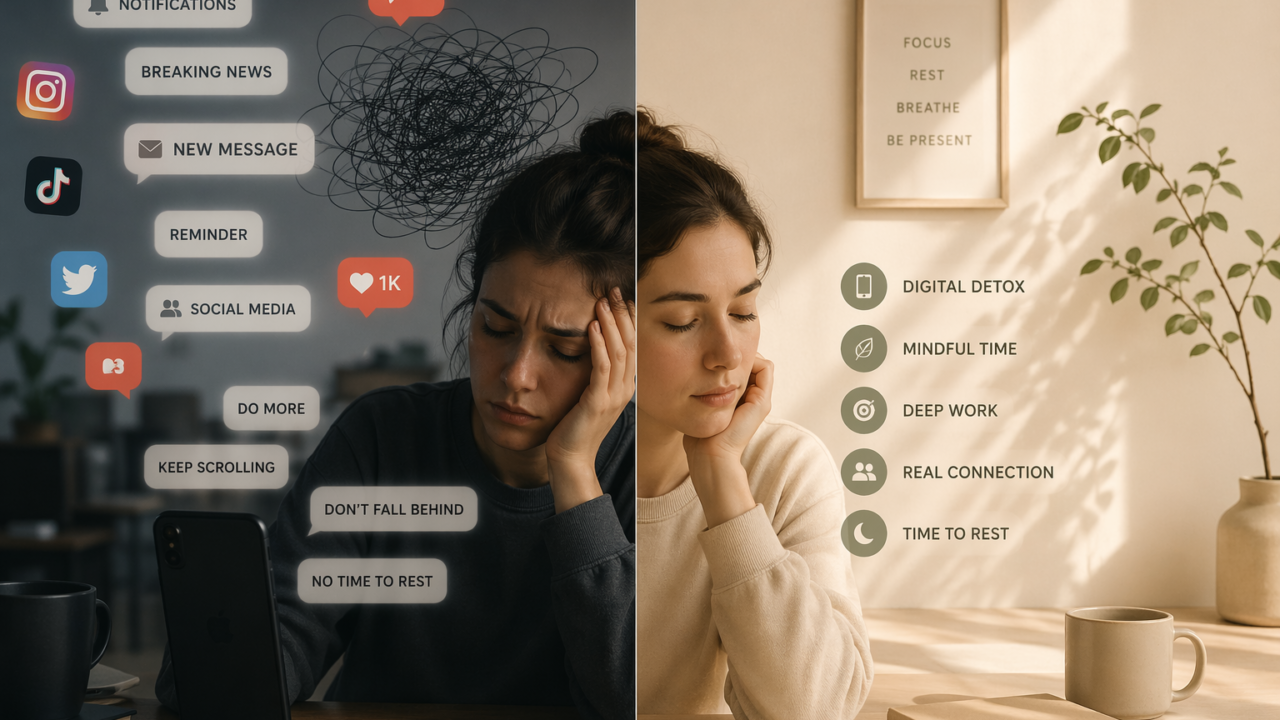
Today’s lifestyle constantly keeps your brain stimulated — through screens, notifications, work pressure, and information overload. While these may seem normal, they prevent your body from entering a true state of rest.
Over time, your nervous system adapts to this constant stimulation and begins to treat it as the default state. This is why many people feel uncomfortable even when things are calm — because their body is not used to slowing down.
How to Start Regulating Your Nervous System
Build a Consistent Evening Wind-Down Routine
Your body needs a transition from activity to rest. Reducing screen exposure, dimming lights, and slowing your pace in the evening helps signal your system that it is safe to relax.
Use Slow, Intentional Breathing
Breathing is one of the fastest ways to influence your nervous system. Slower exhalation patterns can activate your body’s relaxation response and reduce internal stress signals.
Reduce Constant Stimulation
Creating moments of silence — without screens or distractions — allows your brain to reset. Even short breaks during the day can significantly improve your mental state.
👉 Follow this: Daily Nervous System Reset Routine
Final Thoughts
If you recognize these signs, it does not mean something is wrong with you. It simply means your body has been under stress for too long without enough recovery.
The good news is that your nervous system can be retrained. With small, consistent changes, your body can gradually return to a more balanced and calm state.
Start simple. Focus on consistency. And give your body the space it needs to heal.


 Why You Feel Mentally Exhausted Even After Doing Nothing
 You’re Not Lazy — You’re Overstimulated (And It’s Draining Your Mind)
 Dopamine Detox for Mental Clarity: Why Your Mind Feels Tired All the Time
 Night Routine to Calm Your Mind Before Sleep (Simple + Effective Guide)
 Morning Routine to Reduce Cortisol Naturally (Simple + Effective Guide)