



- Why “Hydrating” and “Moisturizing” Are Not the Same Thing
- What Hydrating Actually Means
- What Moisturizing Actually Means
- Why Indian Skin Often Needs BOTH
- Hydrating Ingredients vs Moisturizing Ingredients
- How to Layer Hydration and Moisture Correctly
- Common Mistakes Indians Make
- Who Should Be Extra Careful
- Final Thoughts
Why “Hydrating” and “Moisturizing” Are Not the Same Thing
One of the biggest skincare misunderstandings is using the words hydrating and moisturizing interchangeably.
In reality, they solve two very different skin problems. Using the wrong one can leave your skin oily, irritated, or constantly breaking out — especially in Indian climate conditions.
This confusion is why many people say, “I use moisturizer every day, but my skin still feels tight.”
What Hydrating Actually Means
Hydration refers to water content in your skin.
When your skin is dehydrated, it lacks water — not oil. This can happen even if your skin looks oily.
Common causes of dehydration in India include:
- Excessive sweating and heat
- Air-conditioned offices
- Hard water exposure
- Over-cleansing
- Overuse of exfoliating acids
Hydrating products pull water into the skin and help skin cells function normally.
Signs Your Skin Is Dehydrated
- Skin feels tight but looks oily
- Fine lines appear suddenly
- Makeup looks patchy
- Skin feels uncomfortable after washing
What Moisturizing Actually Means
Moisturizing refers to sealing and protecting the skin by preventing water loss.
Moisturizers work by strengthening the skin barrier — the same barrier discussed in our skin barrier repair in India guide.
Moisturizers usually contain:
- Occlusives (to lock moisture)
- Emollients (to soften skin)
- Barrier-repair lipids like ceramides
Signs Your Skin Needs Moisture (Not Hydration)
- Flaky or rough texture
- Persistent dryness
- Skin feels itchy after showering
- Products sting on application
Why Indian Skin Often Needs BOTH
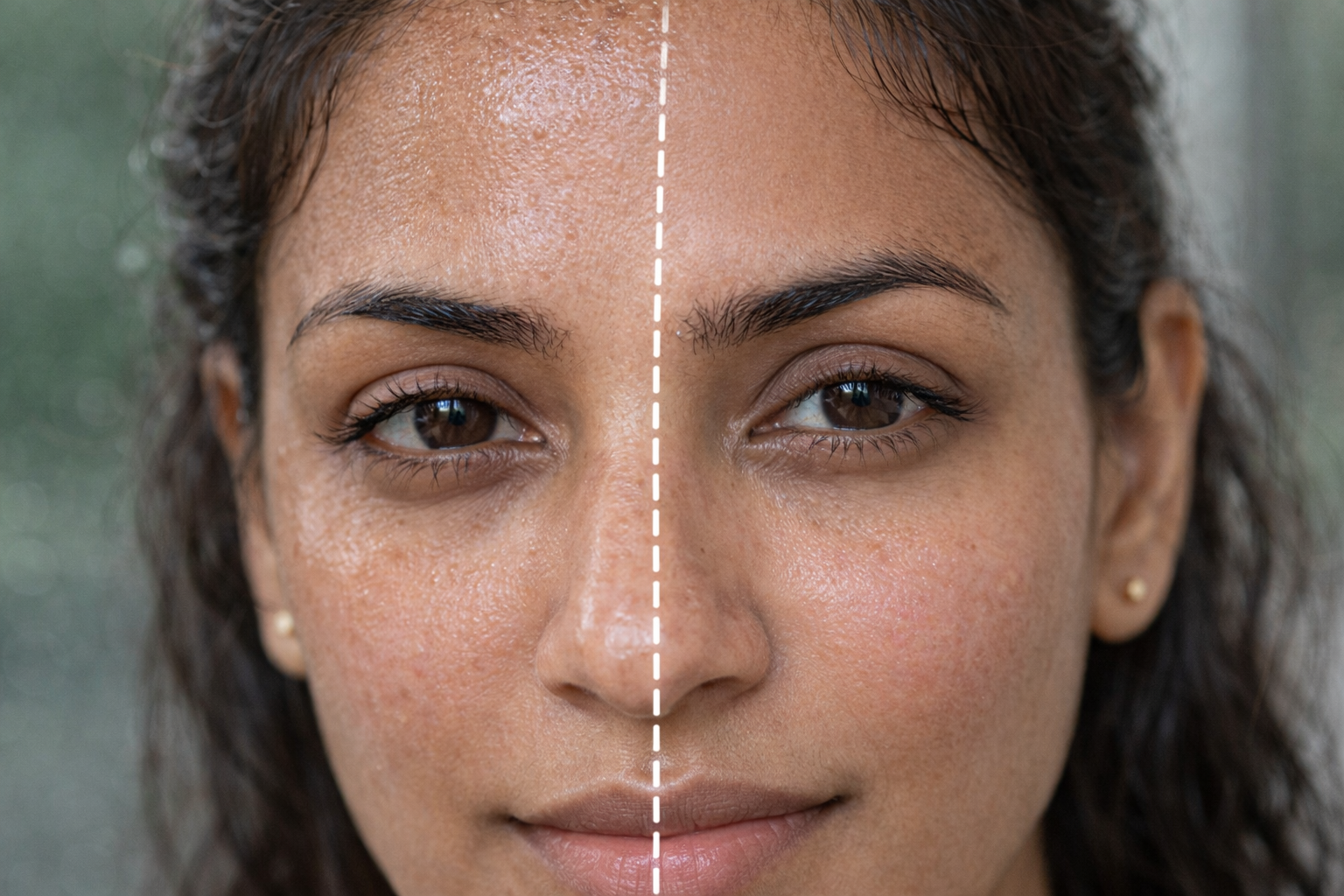
Indian skin commonly suffers from oily but dehydrated conditions.
This happens when:
- Skin loses water due to heat and humidity
- The barrier is weakened by over-exfoliation or hard water
- Oil production increases to compensate
The result is confusing skin behavior — oiliness, breakouts, and sensitivity at the same time.
If you live in hard water areas, dehydration can worsen quickly. Learn how water affects skin in our guide on hard water skin damage in India.
Hydrating Ingredients vs Moisturizing Ingredients
Hydrating Ingredients (Water Boosters)
- Glycerin
- Hyaluronic acid
- Panthenol
- Aloe vera
Moisturizing Ingredients (Barrier Support)
- Ceramides
- Cholesterol
- Fatty acids
- Squalane
- Petrolatum
During barrier damage, focusing only on hydration without sealing can make dehydration worse.
How to Layer Hydration and Moisture Correctly
The correct order matters.
- Apply hydrating product on damp skin
- Wait a few seconds
- Seal with a moisturizer
This combination helps water enter the skin and stay there.
[Affiliate product suggestion: Lightweight hydrating serums + ceramide-based moisturizers suitable for Indian skin]
Common Mistakes Indians Make
- Skipping moisturizer because skin feels oily
- Using only gels without barrier support
- Over-cleansing to control oil
- Confusing fungal acne with dehydration bumps
If bumps persist, read how to differentiate conditions in our article on fungal acne vs damaged skin barrier.
Who Should Be Extra Careful
You should balance hydration and moisture carefully if you:
- Have oily yet tight skin
- Work in AC environments
- Use actives regularly
- Are recovering from over-exfoliation
If you’re rebuilding your barrier, affordable options are covered in Indian pharma creams under ₹500.
Final Thoughts
Hydration and moisture are not interchangeable — and treating them as the same is why many routines fail.
Healthy skin needs water and protection. When both are balanced, oil production stabilizes, sensitivity reduces, and your skin finally feels comfortable.
Understand the difference — your skin will respond better to everything else you use.