




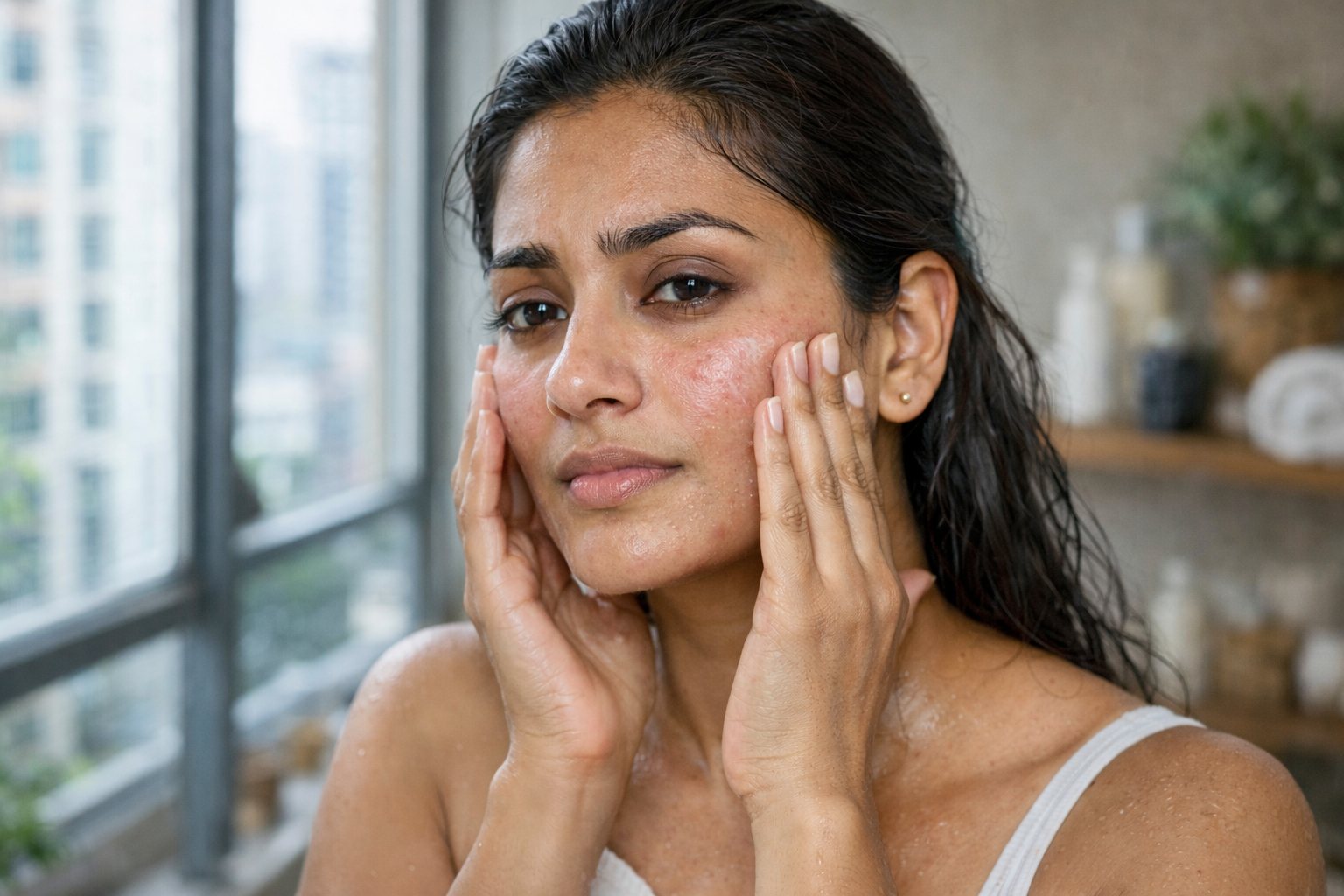
If your skin feels dry, itchy, or irritated immediately after bathing, the problem may not be your moisturizer or face wash — it could be hard water.
In many Indian cities, water contains high levels of calcium and magnesium. This mineral-heavy water silently damages the skin barrier over time.
People often assume they have sensitive skin, acne, or allergies, when the real trigger is daily exposure to hard water.
What Is Hard Water?
Hard water is water that contains a high concentration of dissolved minerals, mainly calcium and magnesium.
Cities like Bengaluru, Delhi, Chennai, Hyderabad, and parts of Mumbai commonly receive hard water through borewells or mixed supply.
How Hard Water Damages Your Skin Barrier
1. Leaves Mineral Residue on Skin
Hard water reacts with cleansers, leaving behind residue that clogs pores and disrupts the skin’s natural lipid layer.
2. Disrupts Skin pH
Healthy skin maintains a slightly acidic pH. Hard water pushes the skin toward alkalinity, weakening its protective barrier.
3. Increases Dryness and Itching
Many people report itching or tightness immediately after showering — a classic sign of barrier disruption.
This is often mistaken for eczema or fungal issues, when it’s actually related to skin barrier repair in Indian climate.
Common Signs Hard Water Is Affecting Your Skin
- Skin itching right after bathing
- White residue feeling after washing face
- Sudden dryness despite moisturizing
- Increased breakouts or clogged pores
- Products “not working” anymore
Best Ways to Protect Your Skin from Hard Water
1. Install a Shower Filter (Most Effective)
A shower filter reduces mineral content before water touches your skin.
[Affiliate product suggestion: Shower filters suitable for Indian hard water conditions]
2. Use a Gentle, Non-Stripping Cleanser
Avoid foaming cleansers that already strip oils — hard water makes this worse.
If your barrier is already compromised, follow a routine focused on damaged skin barrier recovery.
3. Rinse Face with Filtered Water
Using RO or filtered water for your final face rinse can significantly reduce irritation.
4. Moisturize on Damp Skin
This helps trap hydration before mineral residue dries out your skin.
Best Face Wash Type for Hard Water Areas
- Low-foam or cream cleansers
- Ceramide-based formulations
- Fragrance-free products
The Hard Water Survival Kit
We’ve handpicked these specific products because they don’t react with the high TDS levels in Indian tap water.
1. The “Hard Water Specialist”: Detoxie Charcoal Hard Water Face Wash
This is one of the few products in India specifically marketed for hard water. It uses “Chelating agents” that grab onto the minerals in the water so they don’t stick to your skin.
-
Best for: Urban dwellers, residents of large apartment complexes.
2. The “Mineral-Film” Remover: Dot & Key Barrier Repair + Hydrating Gentle Face Wash
Because this is sulfate-free and soap-free, it doesn’t form “soap scum” when it hits hard water. It contains Japanese Rice Water, which is naturally softening.
-
Best for: People whose skin feels “stiff” or “stretchy” after a shower.
3. The “Derm-Approved” Classic: Cetaphil Gentle Skin Cleanser
Dermatologists often recommend Cetaphil in hard water areas because it is a “non-foaming” syndet. It cleanses without needing to create a lather—lathering is what usually fails in hard water.
-
Best for: Sensitive skin or those with Eczema/Psoriasis.
4. The “Tech” Solution: RiverSoft or WaterScience SFU-717 Shower Filter
Strategist’s Note: This is your highest commission item. If a face wash can’t fix it, a filter will.
-
The Pitch: “Don’t just treat the symptom, fix the water.”
Comparison: Soap-Based vs. Hard Water Friendly
| Feature | Regular Soap/Face Wash | Hard Water Friendly (Syndets) |
| Reaction with Minerals | Creates “Soap Scum” (Film) | Remains clear and liquid |
| Pore Status | Can clog due to residue | Leaves pores clean |
| Skin pH | Usually Alkaline (Bad) | Balanced (5.5 pH) |
| Best For | Soft Water Areas | Metros (Hard Water) |
Hard Water vs Fungal Acne: Don’t Confuse the Two
Hard water damage can cause tiny bumps and irritation that resemble fungal acne.
If you live in humid regions, learn how to differentiate this from fungal acne vs damaged skin barrier before starting treatments.
Can Hard Water Cause Acne?
Indirectly, yes. When residue clogs pores and disrupts the barrier, acne-causing bacteria thrive.
This is why many people notice breakouts despite “good skincare.”
Final Thoughts
If your skin worsens after every shower, don’t blame your products immediately.
Fixing hard water exposure often improves skin texture, hydration, and breakouts — even before changing your routine.
Sometimes, the solution isn’t another serum — it’s fixing the water touching your skin every day.
[…] If your barrier damage is caused by mineral-heavy water, also read our guide on hard water skin damage in India. […]
[…] Itching after showering (often linked to hard water damage to skin) […]