





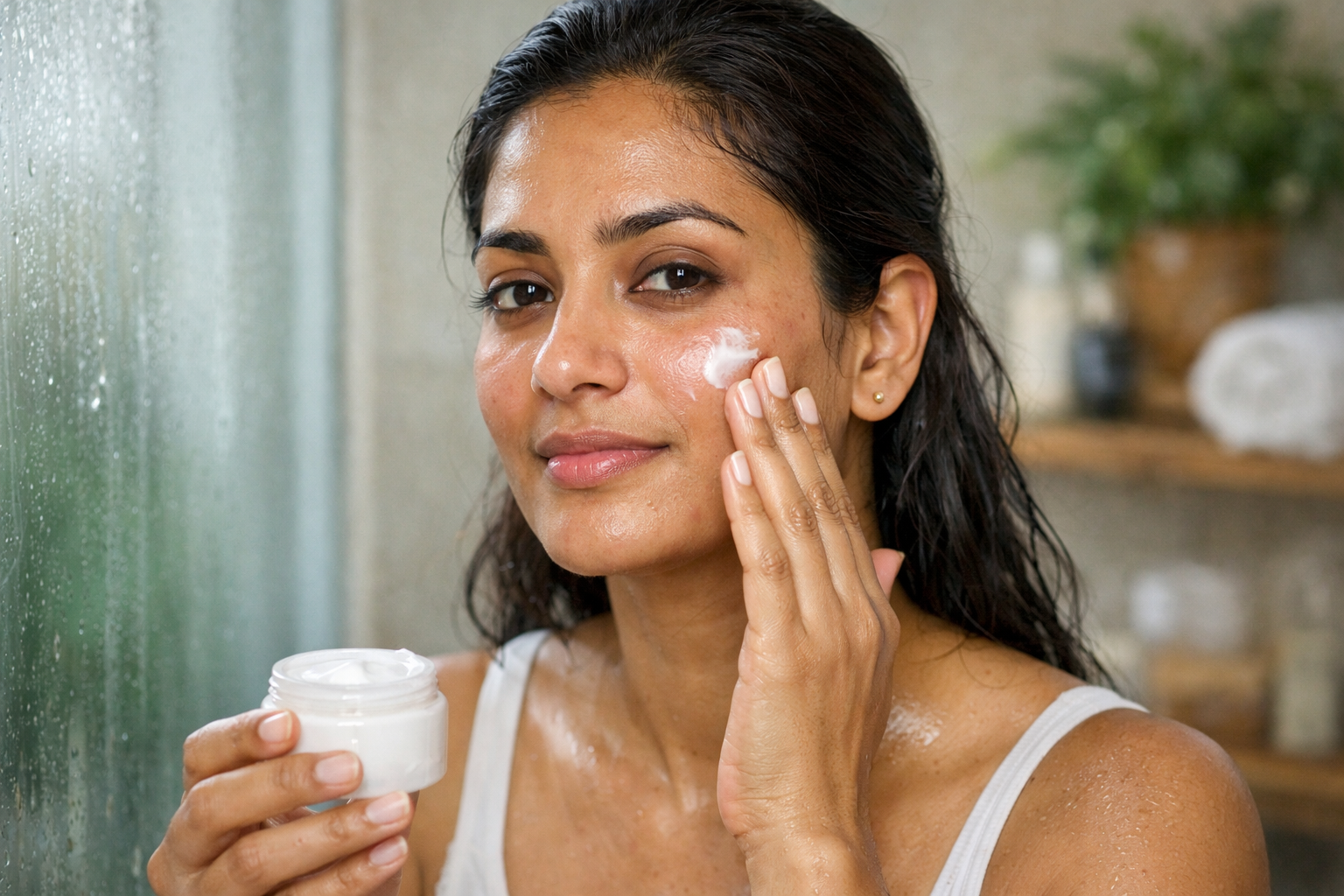
- Why Skin Barrier Damage Is So Common in India
- What Is the Skin Barrier?
- Signs Your Skin Barrier Is Damaged
- Top Causes of Barrier Damage (Indian Context)
- The 3-Step Skin Barrier Repair Routine
- Ingredients to Pause Until Your Barrier Heals
- How Long Does Barrier Repair Take?
- When to See a Dermatologist
- Final Thoughts
Why Skin Barrier Damage Is So Common in India
If your skin suddenly feels tight, burns when you apply sunscreen, looks oily yet flaky, or starts breaking out without warning, your skin barrier may be compromised.
In India, barrier damage is extremely common due to heat, humidity, pollution, hard water, and overuse of strong actives like retinol and exfoliating acids.
Many people assume they have acne or “dull skin” and add more products — but the real issue is often a weakened protective layer.
What Is the Skin Barrier?
Your skin barrier is the outermost layer of your skin. Think of it like a brick wall:
- Skin cells = bricks
- Ceramides, fatty acids, and cholesterol = mortar
When this wall is strong, your skin retains moisture and blocks irritants. When it weakens, water escapes and irritation enters.
Signs Your Skin Barrier Is Damaged
- Stinging when applying moisturizer or sunscreen
- Sudden redness or sensitivity
- Oily yet dehydrated appearance
- Breakouts that don’t improve with acne treatments
- Itching after showering (often linked to hard water damage to skin)
- Skin feels tight immediately after cleansing
Top Causes of Barrier Damage (Indian Context)
1. Over-Exfoliation
Layering AHAs, BHAs, retinol, scrubs, and vitamin C without recovery time weakens the protective lipid layer. Social media trends often promote overuse without explaining repair phases.
2. Hard Water Exposure
In cities like Bengaluru, Delhi, and parts of Mumbai, mineral-heavy water disrupts your skin’s natural pH and leaves residue that increases dryness and itching.
[Affiliate product suggestion: Shower filters designed for Indian hard water conditions]
3. Pollution & Heat
Urban pollution increases oxidative stress, making skin more reactive. Constant sweating in humid climates also weakens barrier stability.
4. DIY Remedies
Lemon, baking soda, toothpaste, and harsh scrubs can strip the skin’s natural oils and cause micro-damage.
The 3-Step Skin Barrier Repair Routine
Step 1: Switch to a Gentle, Non-Foaming Cleanser
Avoid sulfates and harsh foaming cleansers. Your face should not feel squeaky clean — that tight feeling is often a warning sign.
[Affiliate product suggestion: Ceramide-based gentle cleansers suitable for sensitive Indian skin]
Step 2: Rebuild with Barrier-Supporting Ingredients
Look for formulations containing:
- Ceramides
- Cholesterol
- Fatty acids
- Panthenol
- Centella Asiatica
If you’re unsure which affordable options work well, explore our guide on Indian pharma skincare products for barrier repair.
Top 3 Recommended Products
1. Venusia Max Intensive Moisturizing Lotion
This is the “Holy Grail” for dry skin in India. It contains a unique blend of 4 different butters (Shea, Aloe, Cocoa, and Mango) alongside Glycerin.
-
Best for: Very dry skin, post-peel care, or winter itch.
-
Price: ~₹550
2. Excela Moisturiser for Oily & Acne Prone Skin
If you have a damaged barrier but still get pimples, this is your best friend. It regulates sebum while the ceramides fix the “cracks” in your skin.
-
Best for: Oily/Combination skin, office-goers in humid cities.
-
Price: ~₹499
3. Acnemoist Cream
A feather-light cream designed for people on harsh acne medications (like Isotretinoin). It provides “oil-free” hydration.
-
Best for: Teenagers or adults with active acne and redness.
-
Price: ~₹380
Step 3: Seal It In (Especially at Night)
At night, apply a light occlusive layer to reduce moisture loss.
- Petrolatum (thin layer)
- Squalane
- Barrier-repair balms
If you live in humid climates, avoid heavy layering that may trigger confusion between fungal acne vs damaged skin barrier.
Ingredients to Pause Until Your Barrier Heals
- Retinol
- Strong AHAs and BHAs
- Physical exfoliating scrubs
- High-percentage Vitamin C
- Fragrance-heavy products
Allow at least 3–4 weeks before slowly reintroducing actives.
How Long Does Barrier Repair Take?
Mild damage may improve within 2–3 weeks. Moderate irritation can take 4–6 weeks. Severe cases may require dermatologist consultation.
When to See a Dermatologist
If your skin shows persistent redness, burning, or signs of infection, seek professional guidance. Barrier damage can sometimes mimic eczema or rosacea.
Final Thoughts
Your skin barrier is the foundation of every skincare goal — whether it’s acne control, brightening, or anti-aging.
Instead of chasing trends, focus on strengthening your barrier first. Once it stabilizes, every other product in your routine performs better.
Repair first. Glow later.
[…] This is why slugging can be helpful during recovery phases explained in our skin barrier repair in India guide. […]
[…] Many of these are signs of dehydration or early skin barrier damage, explained in our skin barrier repair in India guide. […]
[…] Moisturizers work by strengthening the skin barrier — the same barrier discussed in our skin barrier repair in India guide. […]
[…] Learn more in our detailed guide on skin barrier repair in India. […]
[…] If you’re new to barrier repair, start with the basics explained in our skin barrier repair in India guide. […]