
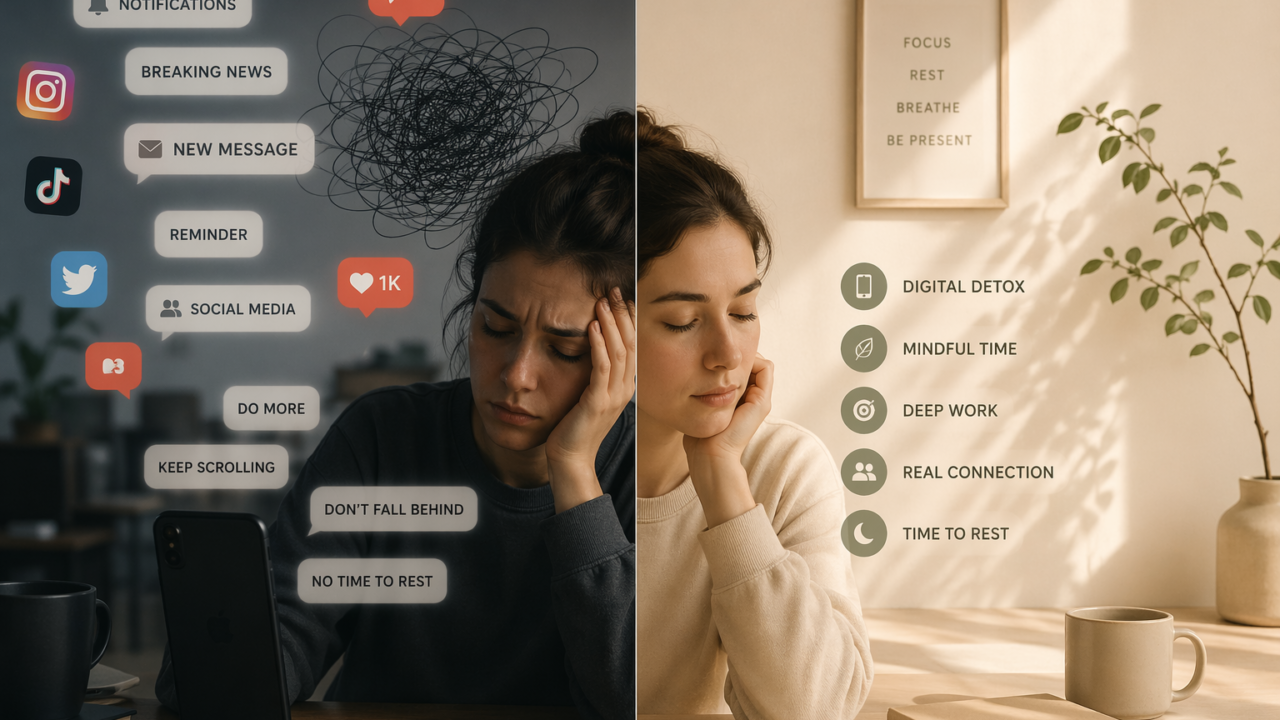





The multitasking effect on brain performance is one of the most underestimated causes of mental fatigue in modern life. Many professionals pride themselves on handling multiple tasks at once. But neurologically, multitasking does not increase productivity — it increases cognitive strain.
What feels like efficiency is often constant task-switching.
Your Brain Doesn’t Truly Multitask
The brain processes one cognitively demanding task at a time. When you “multitask,” you rapidly switch attention between tasks.
Each switch requires mental recalibration. Over time, this drains energy — contributing to Why You Feel Mentally Drained by Evening.
Task Switching Triggers Micro-Stress
Every notification, email preview, or message causes a shift in attention.
This constant shifting overlaps with the patterns discussed in The Attention Economy, where digital systems compete for your focus.
Even small interruptions activate alert responses in the nervous system.
The Nervous System Cost
Frequent switching keeps your body in mild alert mode. Over time, this may contribute to nervous system dysregulation symptoms.
You may notice:
- Shallow breathing
- Restlessness
- Irritability
- Difficulty relaxing after work
Why Multitasking Reduces Deep Focus
Deep work requires sustained attention. Multitasking interrupts the neurological flow state needed for problem-solving and creativity.
This fragmentation contributes to modern life mental overwhelm.
The result is feeling busy — but not accomplished.
Multitasking and Sleep Quality
When your brain switches tasks all day, it remains stimulated even at night.
This can contribute to lighter, less restorative sleep — similar to what many experience in Why You Feel Tired Even After Sleeping 8 Hours.
Even caffeine patterns can amplify this cycle, especially if you relate to Why Coffee Makes Some People Anxious.
Signs Multitasking Is Affecting You
- Constantly switching browser tabs
- Checking phone during conversations
- Starting tasks but not finishing them
- Feeling mentally exhausted without heavy work
- Difficulty focusing without background stimulation
How to Reverse the Multitasking Effect
1. Time-Block Deep Work
Protect 45–90 minute single-task sessions.
2. Silence Notifications During Focus Periods
Reduce external triggers.
3. Create Clear Task Endings
Finish one cognitive loop before starting another.
4. Build Recovery Gaps
Short walks and screen-free pauses regulate your nervous system.
If This Resonates, Read Next:
- Feeling overstimulated? → The Hidden Cost of Modern Work
- Struggling with constant distraction? → Phone Habits That Quietly Destroy Focus
- Experiencing anxiety-like symptoms? → Nervous System Dysregulation Symptoms
Final Thoughts
The multitasking effect on brain health is not dramatic — it is cumulative.
Small interruptions repeated daily rewire attention patterns. Over time, they increase stress and reduce clarity.
Focus is not just a productivity tool. It is a biological resource worth protecting.