




- What Is the Attention Economy?
- How It Rewires Your Brain
- Why Multitasking Feels Productive — But Isn’t
- The Nervous System Connection
- Why You Feel Tired Even After Rest
- Signs the Attention Economy Is Affecting You
- How to Protect Your Attention
- Attention Is a Biological Resource
- If This Resonates, Read Next:
- Final Thoughts
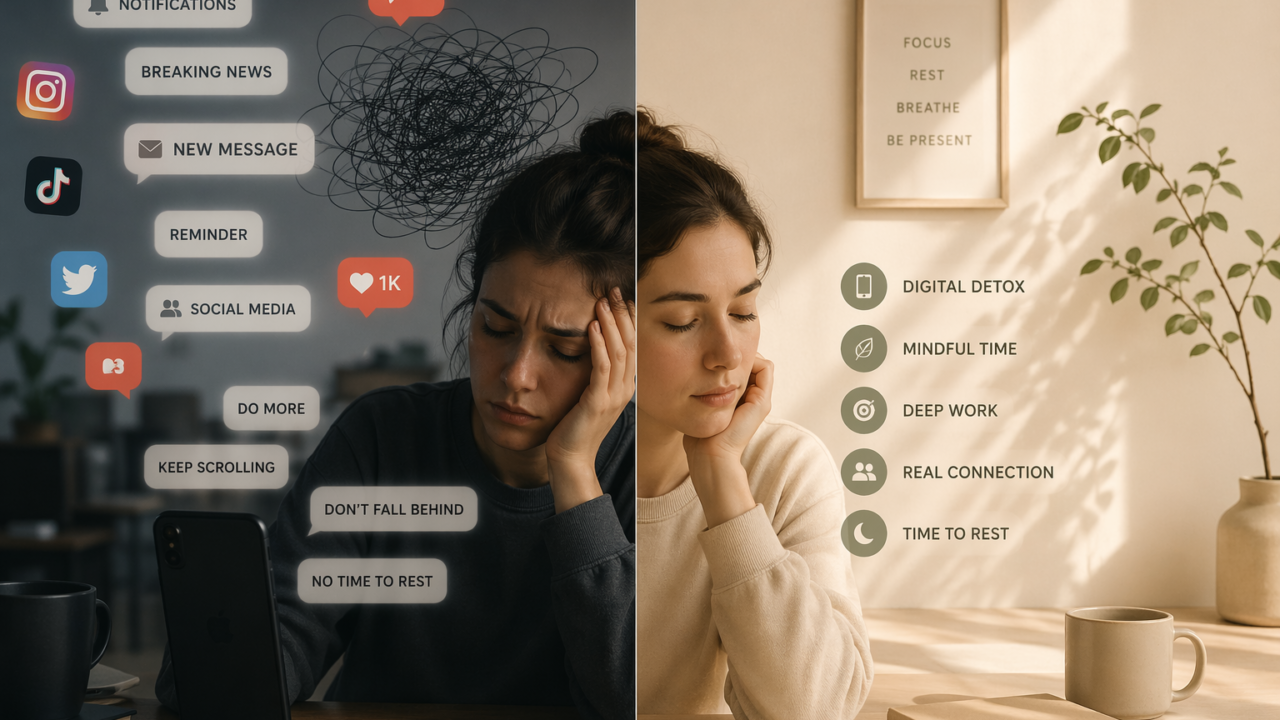
The attention economy impact on brain function is one of the defining psychological shifts of modern life. Every notification, scroll, and autoplay video is not accidental. It is engineered to capture and hold your focus.
In a world where attention equals profit, your concentration has become a product.
What Is the Attention Economy?
The attention economy refers to digital platforms competing for limited human focus. Apps, news feeds, and streaming services are designed to maximize engagement time.
This constant competition creates cognitive overload, contributing to modern life mental overwhelm.
Your brain was not built for continuous novelty.
How It Rewires Your Brain
Every time you check your phone and see something new, your brain releases dopamine. Over time, this trains your brain to crave stimulation.
This cycle overlaps with patterns seen in Phone Habits That Quietly Destroy Focus.
The result?
- Reduced attention span
- Increased distractibility
- Lower tolerance for boredom
- Difficulty entering deep work
Why Multitasking Feels Productive — But Isn’t
Switching between tabs and tasks creates a sense of activity. But neurologically, it fragments your cognitive energy.
This contributes to the mental fatigue described in Why You Feel Mentally Drained by Evening.
Your brain spends more energy switching than solving.
The Nervous System Connection
Constant notifications act as micro-stress signals. Even if they seem harmless, they activate your alert system repeatedly throughout the day.
Over time, this may contribute to nervous system dysregulation symptoms.
When the brain never experiences silence, the body never fully relaxes.
Why You Feel Tired Even After Rest
Many people sleep 7–8 hours yet feel exhausted.
When your mind consumes high volumes of stimulation daily, recovery becomes harder — even if you sleep well. This experience is explored further in Why You Feel Tired Even After Sleeping 8 Hours.
Signs the Attention Economy Is Affecting You
- Checking your phone without realizing it
- Feeling restless during quiet moments
- Difficulty reading long articles
- Struggling to focus without background noise
- Feeling mentally “busy” even when idle
How to Protect Your Attention
1. Schedule Screen Windows
Limit reactive scrolling. Check messages intentionally.
2. Create Notification Boundaries
Disable non-essential alerts.
3. Rebuild Boredom Tolerance
Allow moments without stimulation. Walk without headphones.
4. Practice Single-Tasking
Deep focus restores cognitive strength and reduces stress load.
Attention Is a Biological Resource
Your focus is not just a productivity tool. It is a nervous system resource.
When you guard it, mental clarity improves.
When you surrender it constantly, overwhelm becomes normal.
If This Resonates, Read Next:
- Feeling overstimulated? → The Hidden Cost of Modern Work
- Struggling with anxiety symptoms? → Nervous System Dysregulation Symptoms
- Want calmer mornings? → Morning Habits That Quietly Improve Energy Levels
Final Thoughts
The attention economy impact on brain function is subtle but powerful.
Protecting your focus is not about discipline alone. It is about understanding how modern systems are designed — and choosing to reclaim your cognitive space.