





- The Hidden Cost of Modern Work: Stress, Screens, and the Nervous System
- Why Modern Work Feels Different From Traditional Stress
- The Nervous System Under Continuous Demand
- Digital Overload and Cognitive Fatigue
- Screens, Blue Light, and Sleep Disruption
- The Always-On Culture
- Early Signs Your Nervous System Is Overloaded
- Recovery Is Not Passive
- Long-Term Nervous System Protection
- FAQ
- Conclusion
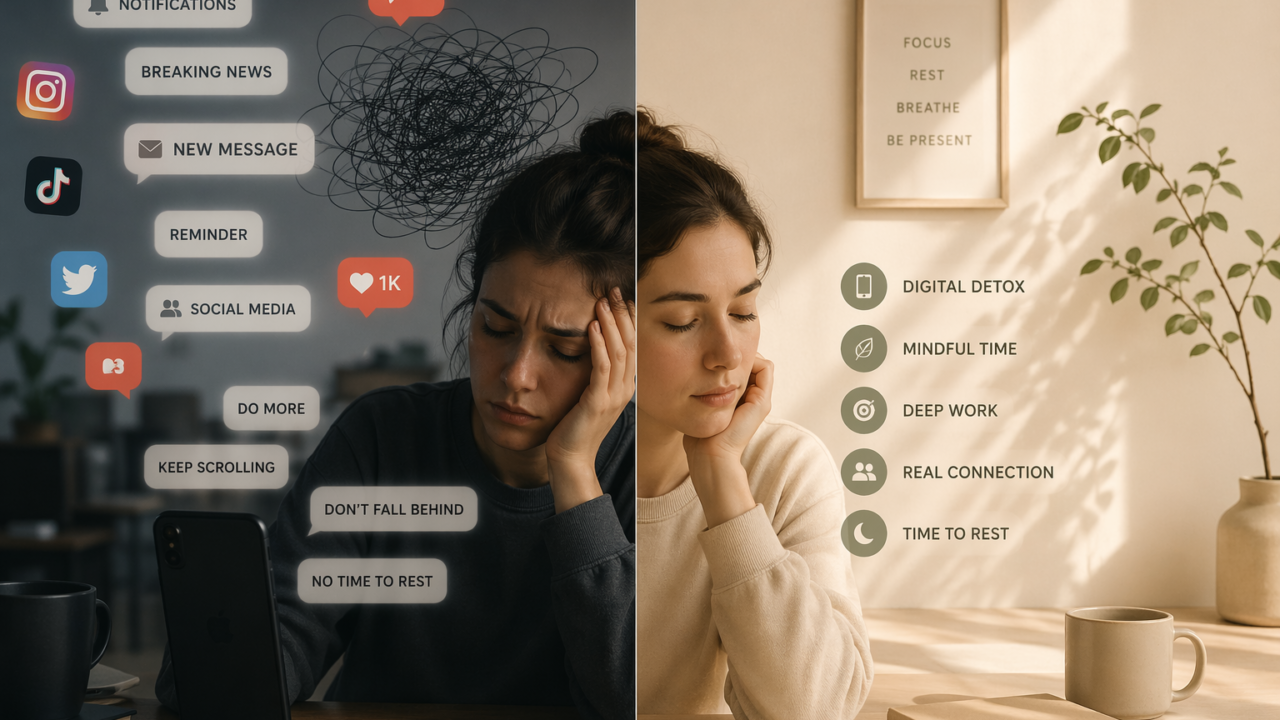
The Hidden Cost of Modern Work: Stress, Screens, and the Nervous System
Modern work looks cleaner than ever. Climate-controlled offices. Remote flexibility. Digital efficiency. Fewer physical demands.
Yet mental exhaustion is rising. Sleep problems are common. Focus feels fragile. Burnout is no longer rare — it is normalized.
The hidden cost of modern work is not physical strain. It is nervous system strain.
This article explores how stress, screens, constant connectivity, and cognitive overload are quietly reshaping your brain, hormones, and recovery systems — and what evidence-informed recovery actually looks like.
Why Modern Work Feels Different From Traditional Stress
Historically, stress was acute and physical. A threat appeared. The body activated. The threat passed. The nervous system reset.
Modern work stress is different:
- Low-grade but constant
- Cognitive rather than physical
- Screen-mediated
- Without clear resolution
- Often extending into evenings
Your brain does not distinguish well between a predator and a performance review. It responds through the same stress architecture — the hypothalamic-pituitary-adrenal (HPA) axis.
When activation becomes chronic, recovery becomes impaired.
The Nervous System Under Continuous Demand
Sympathetic Activation Without Completion
The sympathetic nervous system prepares you for action: increased heart rate, alertness, cortisol release.
In healthy cycles, this activation is followed by parasympathetic recovery — digestion, repair, deep sleep.
Modern work often sustains mild sympathetic activation for 8–12 hours daily.
Notifications, emails, performance pressure, multitasking, and constant micro-decisions prevent full downregulation.
This is why rest can feel unrefreshing.
Cortisol Rhythm Disruption
Cortisol should peak in the morning and decline gradually toward night.
Chronic digital engagement and late work exposure can flatten this rhythm.
Common signs include:
- Difficulty waking up
- Afternoon energy crashes
- Evening alertness despite fatigue
- Light, fragmented sleep
This pattern often overlaps with what we explore in how poor sleep affects metabolic health.
Digital Overload and Cognitive Fatigue
Unlike manual labor, knowledge work depends on sustained prefrontal cortex activation.
The prefrontal cortex governs:
- Decision-making
- Attention control
- Working memory
- Impulse regulation
When constantly switching tasks, responding to alerts, or processing large volumes of information, this region fatigues.
This is not laziness. It is neural depletion.
We examine this more deeply in digital fatigue and brain overstimulation.
Task Switching Is Not Multitasking
Every task switch carries a cognitive cost. Studies show it can take several minutes to fully regain depth after interruption.
Repeated switching fragments attention and increases perceived workload — even if total hours remain the same.
Screens, Blue Light, and Sleep Disruption
Late-night work exposure introduces two biological stressors:
- Blue light suppressing melatonin
- Cognitive arousal delaying sleep onset
Even if you “fall asleep,” sleep depth may be compromised.
Over time, this creates cumulative sleep debt, which further impairs emotional regulation and stress tolerance.
This connection is explored in blue light and modern sleep disruption.
The Always-On Culture
Remote work removed commute time. It also removed psychological boundaries.
When work devices remain within arm’s reach:
- The brain does not fully disengage
- Background stress persists
- Recovery windows shrink
True recovery requires perceived safety and completion — not just physical absence from a desk.
Early Signs Your Nervous System Is Overloaded
- Brain fog by afternoon
- Reduced tolerance for minor stress
- Sleep that feels light or unrefreshing
- Craving constant stimulation
- Difficulty focusing on one task
- Increased anxiety at night
These are not personality flaws. They are regulatory signals.
Recovery Is Not Passive
Scrolling on a different screen is not recovery.
True nervous system recovery requires downregulation.
Micro-Recovery During the Workday
- 90-minute work cycles with 10–15 minute breaks
- Stepping outdoors for natural light
- Slow nasal breathing for 3–5 minutes
- Physical movement between cognitive blocks
We will expand this in an upcoming guide on micro-recovery and nervous system resets.
Evening Boundary Rituals
- Hard stop time for digital work
- Dim lighting 60–90 minutes before sleep
- Device separation from bed
- Low-cognitive wind-down routine
Deep Work Blocks
Reducing task switching protects cognitive resources.
- Single-task sessions
- Notification batching
- Email windows instead of constant monitoring
This protects dopamine balance and attention sustainability.
Long-Term Nervous System Protection
Modern work is unlikely to slow down.
Protection must become intentional.
- Prioritize sleep as non-negotiable infrastructure
- Schedule recovery before exhaustion
- Build screen-free periods daily
- Strengthen parasympathetic tone through exercise and breathwork
This is not about escaping modern life. It is about regulating within it.
FAQ
Is modern work actually more stressful than previous generations?
Physical strain has decreased in many professions, but cognitive and psychological load has increased. Continuous connectivity creates sustained low-grade stress exposure.
Can digital fatigue cause long-term brain damage?
There is no evidence that normal screen use causes structural brain damage. However, chronic stress and sleep deprivation can impair cognitive performance and emotional regulation.
Why do I feel tired but wired at night?
This often reflects delayed cortisol decline combined with late cognitive stimulation and light exposure.
How long does nervous system recovery take?
Mild dysregulation may improve within weeks of consistent behavioral changes. Chronic burnout can require months of structured recovery.
Conclusion
The hidden cost of modern work is rarely visible on a lab test or performance review.
It accumulates quietly in sleep disruption, irritability, mental fog, and emotional depletion.
Understanding how stress, screens, and the nervous system interact is the first step toward sustainable productivity.
Performance is not built on constant activation. It is built on well-timed recovery.
Medical Disclaimer: This article is for educational purposes only and does not substitute professional medical advice, diagnosis, or treatment. If you experience persistent anxiety, sleep disorders, or burnout symptoms, consult a qualified healthcare professional.